
How to Eliminate Standing Water Mosquito Breeding Grounds
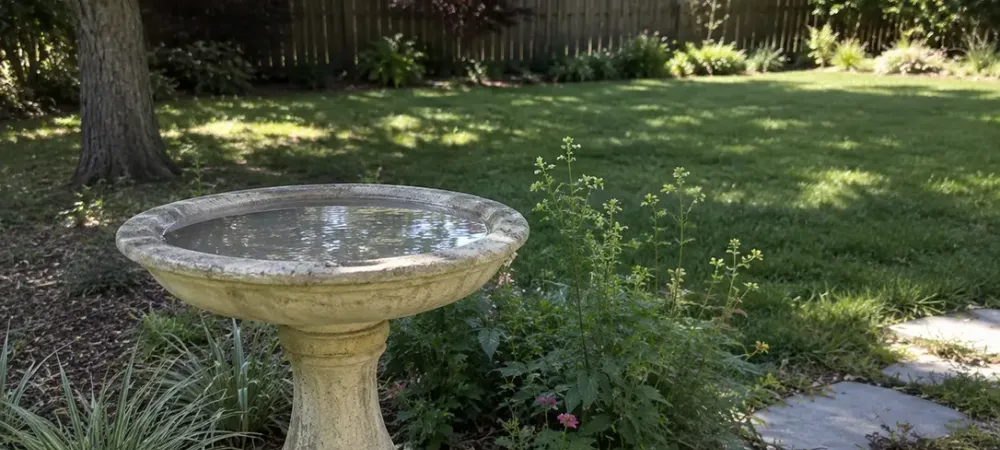
Most of the mosquitoes biting you in your own backyard probably hatched there, since the Alabama Department of Public Health notes mosquitoes typically stay within a quarter mile of where they were born. That means eliminating standing water around your own home is one of the highest-leverage things you can do, not just a token gesture before calling in help. Here's where mosquitoes are actually breeding, including the spots most homeowners walk right past.
Quick answer: Mosquitoes can lay eggs in as little as a teaspoon of water, so eliminating standing water means checking far more than obvious puddles. Bird baths, clogged gutters, tarps, and bottle caps all count, and the Alabama Department of Public Health recommends checking weekly since a mosquito's life cycle can complete in as few as 10 days.
In This Article
Why Standing Water Matters So Much
Eliminating standing water around your home directly reduces the mosquito population biting you, because most mosquitoes never travel far from where they hatched. The Alabama Department of Public Health notes mosquitoes typically stay within a quarter mile of their breeding site, which means the swarm in your yard is very likely coming from water sitting somewhere on your own property or your immediate neighbor's. That's genuinely good news, since it puts real control back in your hands rather than leaving you dependent on a wider area you can't manage.
How Little Water It Actually Takes
A mosquito can lay eggs in as little as a teaspoon of water, which is far less than most people assume when they're scanning a yard for "standing water." Not having an obvious puddle or pond doesn't mean you're clear, since a bottle cap, a clogged gutter segment, or a plant saucer holds more than enough water to complete an entire breeding cycle. That life cycle can finish in as few as 10 days from egg to biting adult, which is why a one-time check rarely solves the problem for long.
Commonly Overlooked Breeding Spots
The obvious spots, like a kiddie pool or a low spot in the yard, usually get checked. It's the smaller, easy-to-forget spots that keep a mosquito population going even after someone thinks they've handled it.
| Spot | Why It Gets Missed | What to Do |
|---|---|---|
| Clogged gutters | Not visible from the ground | Clear debris so water can't pool |
| Tarps over boats, grills, or firewood | Water collects in the folds unnoticed | Arrange the tarp so water drains off |
| Tire swings | Holds rainwater inside the tire itself | Drill a drainage hole in the bottom |
| Plant saucers and pots | Small amount looks harmless | Empty and dry out at least weekly |
| Bird baths and pet bowls | Water looks clean, so it's assumed safe | Change and scrub the water weekly |
Weekly Elimination Checklist
- Empty and scrub bird baths, pet dishes, and animal troughs at least once a week
- Clear debris from roof gutters so rainwater doesn't pool along the roofline
- Drill a drainage hole in tire swings so rainwater can't collect inside
- Arrange tarps over boats, grills, or firewood so water drains rather than pools in the folds
- Empty children's toys and wading pools after every rain, and store pools on their side when not in use
- Cover rain barrels and water storage containers with tightly fitting lids or fine mesh
- Fill in low spots in the yard where water sits for more than a day or two after rain
When DIY Isn't Enough
Source elimination handles the water you can control, but it doesn't do anything about breeding sites on neighboring property, in drainage ditches, or in wooded areas you can't access. A yard bordering any of those will keep getting reinvaded no matter how thoroughly you check your own property, which is the point where a professional program that treats both adults and breeding sites starts to make more sense than DIY elimination alone.
Still Dealing With Mosquitoes After Doing the Checklist?
Handled everything on your end and still getting bitten? Call Envirogreen at 334-246-3131 and we'll help you figure out the right next step.
Sources: Alabama Department of Public Health, "Prevent mosquito bites and reduce mosquito breeding sites around the home after storm events," alabamapublichealth.gov/blog/2024/09/nr-17.html. Alabama Department of Public Health, "Vector Control," alabamapublichealth.gov/escambia/vector-control.html.