
Quick Answer
Fire ants are one of Alabama's most common outdoor pests, found in all 67 counties since arriving through the Port of Mobile in the early 1900s. They build mounds in sunny, open areas of the yard and deliver a painful, burning sting when disturbed, often attacking in swarms. Mounds tend to pop up after rain or in well-watered lawns, and multiple mounds usually mean multiple colonies.
Identification
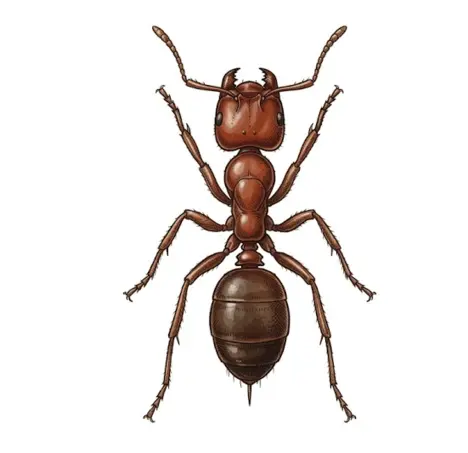
Red imported fire ants are reddish-brown with a darker abdomen and a distinctive three-segmented thorax, which sets them apart from other Alabama ant species like odorous house ants or carpenter ants. Their mounds are just as identifying as the ants themselves.
| Feature | Appearance | Notes |
|---|---|---|
| Worker | Reddish-brown, 1/16 to 1/4 inch long | Most of what you'll see foraging or defending the mound |
| Queen | Larger, up to 1/3 inch long | Can live several years and keep a colony growing |
| Mound | Fluffy dirt mound, no visible entry hole | Often appears in open, sunny areas after rain |
Signs Of Infestation
Dirt mounds in open, sunny parts of the lawn, often near irrigation or after rainfall.
Unlike other ant mounds, an undisturbed fire ant mound has no visible opening.
When disturbed, workers swarm upward onto anything vertical, including legs and arms.
Seeing several mounds in the yard usually signals more than one active colony.
Risks And Damage
A fire ant sting causes a painful, burning welt that develops into an itchy, white-tipped blister within a day or two. Beyond the sting itself, fire ants pose a real risk to pets, livestock, and ground-nesting wildlife, and they're known to chew into outdoor electrical equipment like AC units and transformer boxes.
When to take it seriously: some people have an allergic reaction to fire ant venom that can become medically serious. If stings are followed by nausea, chest pain, or difficulty breathing, seek medical attention right away.
Prevention Tips
- Keep children and pets away from active mounds, especially if disturbed
- Maintain a regularly mowed lawn, since mounds are easier to spot and manage in short turf
- Check outdoor electrical equipment and irrigation boxes periodically for nesting activity
- Avoid disturbing a mound directly, since that triggers a defensive swarm
- Call a professional if you see multiple mounds or repeated activity near the home