
Quick Answer
Wolf spiders are large, fast-moving spiders that look intimidating but are generally harmless to people. They're one of the most common spiders in Alabama, often spotted in yards, garages, and basements, and they're frequently mistaken for more concerning species like the brown recluse. Unlike many spiders, wolf spiders don't build webs. They hunt on the ground instead.
Identification
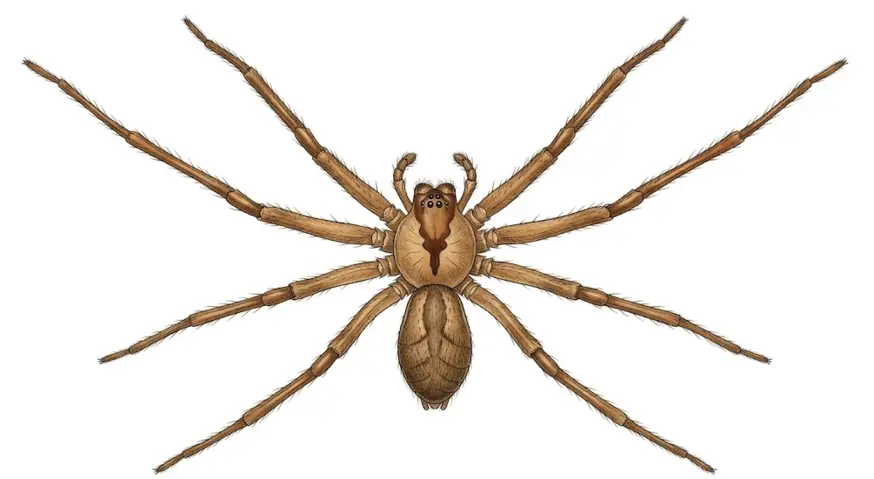
Wolf spiders have thick, hairy bodies, long legs, and large eyes arranged in three rows, with body sizes up to about 1.2 inches. Their coloring runs brown, gray, or black, sometimes with tan markings, which is part of why they're often confused with the brown recluse. The table below shows the key differences.
| Feature | Wolf Spider | Brown Recluse |
|---|---|---|
| Body | Thick, hairy, up to 1.2 inches | Slender, light to dark brown |
| Marking | No distinct pattern | Violin-shaped marking on back |
| Behavior | Hunts on the ground, moves fast, no web | Prefers dark, undisturbed areas |
Signs Of Infestation
Common in garages, basements, leaf litter, and grassy or landscaped areas.
Quick, ground-level movement across floors, especially noticeable at night.
If you're seeing the spider itself but no web, that points to a ground hunter like this one.
Females carry an egg sac, and spiderlings often ride on the mother's back afterward.
Risks And Damage
Wolf spider bites are rare and usually only happen if the spider is provoked or handled. For most healthy adults, a bite causes minor pain, redness, or swelling that resolves on its own. Children, older adults, and people with compromised immune systems may have a stronger reaction and should seek medical attention if symptoms worsen.
The bigger concern is misidentification. Wolf spiders are often mistaken for the black widow or brown recluse, both of which are genuinely venomous. If you're not sure what you're looking at, treat it as a reason to confirm rather than a reason to panic.
Prevention Tips
- Clear leaf litter, mulch piles, and dense ground cover near the home, prime wolf spider habitat
- Seal gaps around doors, windows, and the foundation to limit entry points
- Reduce outdoor lighting near entryways, since it attracts the insects wolf spiders hunt
- Keep garages, basements, and storage areas decluttered
- Call a professional if sightings are frequent or you're unsure of the species