
Quick Answer
The American dog tick, also called a wood tick, is the largest common tick in Alabama. It's easy to spot by its dark brown body and white-marked shield, and it's a documented carrier of spotted fever rickettsiosis, the most commonly reported tick-borne disease in the state. Ticks are more active in early spring and late fall, but Alabama's climate means tick-borne illness gets reported year-round.
Identification
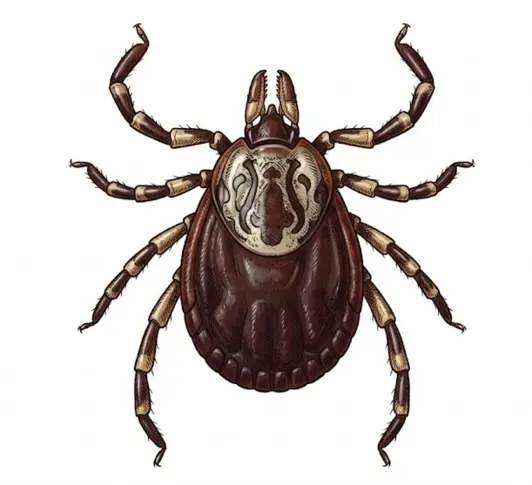
American dog ticks have a dark brown, u-shaped body with short, pointed mouthparts. The white marking on their shield, or scutum, is the easiest way to tell males and females apart, and it's also what separates this species from Alabama's other common ticks.
| Sex | Shield Marking | Notes |
|---|---|---|
| Female | White pigment covers roughly the front third of the shield | Larger body, most often the one found attached and feeding |
| Male | White pigment spread across the entire shield | Smaller and more uniformly marked than the female |
Signs Of Infestation
Dogs that spend time outdoors are a common way ticks make it into the yard and home.
Ticks wait in tall grass, brush, and leaf litter, especially where a mowed lawn meets woods.
Bites are often painless, so a tick can go unnoticed for days while it feeds.
Ticks are commonly picked up walking near the edges of trails, not just deep in the woods.
Risks And Damage
The American dog tick is a documented carrier of Rocky Mountain spotted fever and tularemia. Spotted fever rickettsiosis remains the most commonly reported tick-borne disease tracked by ADPH in Alabama. Because the bite itself is often painless, ticks can stay attached and feeding for days before anyone notices.
Watch for symptoms after a bite: fever, headache, muscle aches, fatigue, or a rash. ADPH notes these can become severe if untreated, so contact a doctor if symptoms develop after a known or suspected tick bite.
Prevention Tips
- Avoid brushy, wooded areas with high grass, and stick to the center of trails
- Treat clothing and gear with 0.5% permethrin, which stays protective through several washes
- Do a tick check on yourself, your kids, and your pets after time outdoors
- Keep the lawn mowed and clear brush or leaf litter at the yard's edge
- If you find an attached tick, use tweezers to pull it straight up with steady pressure, never twist