
Quick Answer
Argentine ants are small, brown, non-native ants that live in massive networks of connected nests spread across a yard. They don't sting or build mounds, but a single landscape can hold hundreds of thousands of them, and heavy trails often push indoors into kitchens and bathrooms. Because the colony is spread out over so many nest sites, Argentine ants are one of the hardest household ants to control.
Identification
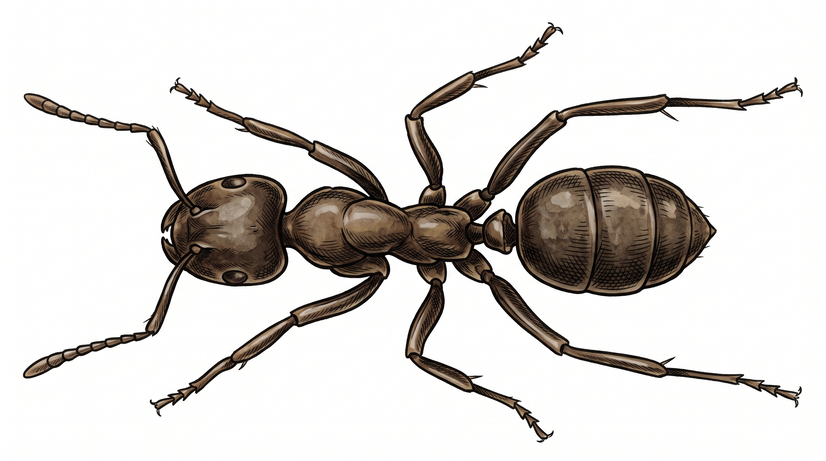
Argentine ant workers are small, brown, and fast-moving, about 1/10 inch long. The best clue is their trails: busy, well-defined lines with large numbers of ants. They're easy to confuse with odorous house ants, and their size and color can also lead homeowners to mistake them for small fire ants.
| Ant | Stings? | Key Clues |
|---|---|---|
| Argentine ant | No | Small, brown, fast-moving; heavy, active trails; no mounds |
| Odorous house ant | No | Similar size and color, front of the abdomen humps over the waist, distinct odor when crushed |
| Red imported fire ant | Yes | Builds visible soil mounds, workers vary in size, aggressive stings |
Signs Of Infestation
Busy lines of small brown ants along counters, baseboards, sinks, and window sills.
In heavily infested yards, many trees have ant trails running up the trunk to feed on honeydew from aphids and similar insects.
Small nests tucked into flower bed mulch, fallen leaves, soil, under logs or bark, and even under shingles.
Argentine ants give off a distinctive odor when their trails or nests are disturbed.
Risks And Damage
Argentine ants are mainly a nuisance pest, but a persistent one. Workers move freely between dozens or even hundreds of connected nests, so when one trail is wiped out, another soon takes its place. In heavily infested yards, they also set up satellite nests inside wall voids, which leads to repeated indoor invasions and contaminated food and pantry items.
Baits alone usually won't solve it. Because the colony is spread across the whole landscape, killing the ants you can see does little to the population. Spraying around bait stations can also repel ants from the bait, so mixing store-bought products often works against itself.
Prevention Tips
- Prune tree limbs and shrubs that touch the house, since ants use them as bridges
- Keep mulch, pine straw, and fallen leaves pulled back from the foundation
- Seal cracks and gaps where trails enter the home
- Repair plumbing and structural leaks that attract ants indoors
- Treat aphids and other honeydew-producing insects on landscape plants
- Store sweets and pantry items in sealed containers and wipe up spills promptly