
Quick Answer
The cat flea is the flea most commonly found on both dogs and cats, and the adults you see on your pet are only a small part of the problem. Flea eggs, larvae, and cocoons far outnumber the adults, and they live in pet bedding, carpets, and shaded resting spots around the yard. Fleas can complete a full generation in as little as three weeks, and they become much more plentiful in spring and summer.
Identification
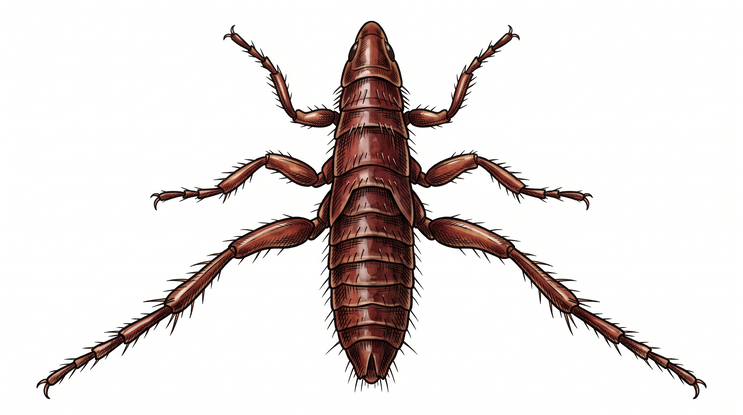
Adult fleas are tiny, wingless insects that jump onto passing animals to feed. Only adults live on pets and bite, but they are just one of four life stages. To control fleas, you have to deal with all four, because the stages you can't see are where most of the population lives.
| Stage | Where You'll Find It | How Long It Lasts |
|---|---|---|
| Eggs | Roll off the pet and collect where it sleeps and rests | Hatch in 2 to 6 days |
| Larvae | Deep in carpet, rugs, and cracks, avoiding sunlight | Mature in 1 to 3 weeks |
| Cocoons | Same hidden areas, waiting for signs of a host | One week to several months |
| Adults | On pets, and on people when pets aren't available | The only stage that bites |
Signs Of Infestation
Constant scratching or skin problems, especially in pets that are allergic to flea bites.
Fleas bite people too, and heavy infestations can make time at home miserable for the whole family.
Indoor infestations concentrate in pet beds, under furniture cushions, and in rooms with carpet or rugs.
Outside, fleas breed under porches, shrubs, and crawl spaces, and in garages or sheds, not in open, sunny lawn.
Risks And Damage
Fleas take the biggest toll on pets. Some dogs and cats develop skin problems from flea-bite allergies, and heavy infestations can cause anemia in puppies and kittens. Pets can also pick up tapeworms by swallowing infected fleas while grooming. In Alabama, fleas are generally not a source of human disease beyond rare tapeworm cases, mostly in children, but their bites are itchy and persistent.
Foggers and flea collars often disappoint. Bug bombs don't reach under furniture or into the cracks where young fleas live, and most of the spray settles where people and pets are more likely to contact it. Flea collars are generally ineffective. Even with the right treatment, new adults can keep emerging from cocoons for a few weeks, so follow-up is part of the process.
Prevention Tips
- Keep every pet on an effective flea prevention product, ideally one recommended by your veterinarian
- Use only products labeled for your type of pet, since some dog flea products are deadly to cats
- Wash pet bedding weekly in hot, soapy water
- Vacuum floors, rugs, and under furniture and cushions, then seal the vacuum bag in a trash bag and throw it away
- Seal crawl spaces and openings under the home to keep strays and wildlife from bringing fleas onto your property
- Avoid leaving pet food outside where stray animals or wildlife can reach it