
Quick Answer
The house mouse is one of three rodents in Alabama that live in close contact with people, along with the Norway rat and the roof rat. It weighs less than an ounce, can slip through an opening just ¼ inch wide, and doesn't need a water source because it gets moisture from its food. With five to ten litters a year, a single pair of mice can multiply into several thousand in one year.
Identification
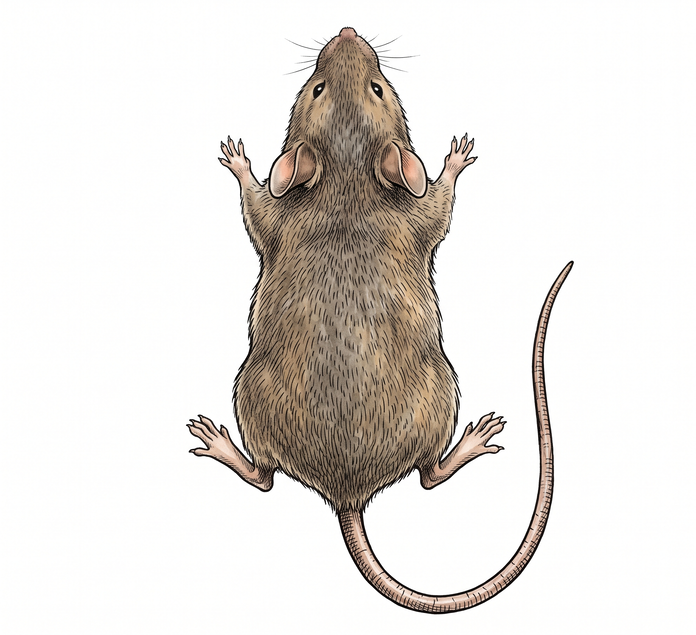
House mice are small and grayish-brown, and they climb, chew, and even swim to get where they want to go. Young rats are often mistaken for mice, but the head and feet give them away. A young rat's head and feet look large for its body, while a house mouse's are small.
| Rodent | Head | Feet |
|---|---|---|
| House mouse | Small | Small |
| Young rat | Large | Large |
Signs Of Infestation
Mice shred paper, cloth, and similar materials into ball-shaped nests, often tucked into drawers, storage, or wall voids.
Small, dark droppings along walls, under sinks, and inside cabinets and pantries.
Chewed food packaging, cardboard, and edges of wood or other rough surfaces.
Tiny footprints in dust or flour. Mice stay close to their nest, so tracks often point to where they are living.
Risks And Damage
House mice can transmit disease, damage property, and bite. They eat almost anything, preferring grains and seeds, and contaminate the food and surfaces they touch. Their constant gnawing and nest building can damage stored items, cardboard, fabric, and paper throughout the home.
Store-bought bait isn't a sure fix. Mice are generally less affected by common anticoagulant baits than rats are, and they don't need a water source to survive. Sealing entry points and removing food and shelter matter just as much as trapping.
Prevention Tips
- Seal any opening ¼ inch or larger with sheet metal or another durable material, since mice can gnaw through rough or edged surfaces
- Add guards around pipes and cables that mice could climb to reach the home
- Trim vines and tree limbs away from the house, since mice can climb them to get inside
- Store food, including pet food and birdseed, in sealed containers
- Keep garbage in rodent-proof containers and remove trash or debris piles near the home
- Wear gloves when handling traps or dead mice, and wash your hands afterward