
Quick Answer
The lone star tick is the most common tick in Alabama, and the one most often linked to alpha-gal syndrome, a tick-related red meat allergy. Unlike ticks that wait on grass for a host to brush by, lone star ticks actively crawl toward people and pets. They are most common in wooded areas and can be active year-round in Alabama's mild climate.
Identification
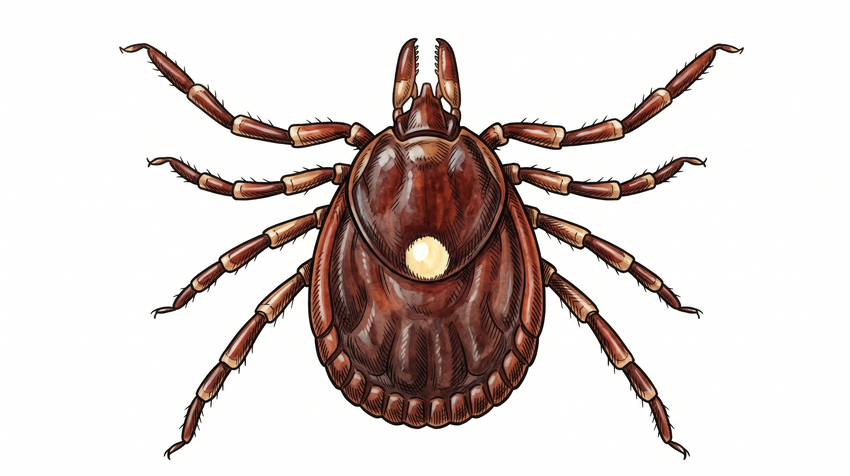
Lone star ticks, sometimes called water ticks, have a round body. Adult females have the single white dot on the back that gives the species its name. Males and young ticks don't carry that dot, so they can be harder to tell apart from other Alabama ticks.
| Tick | Key Markings | Size |
|---|---|---|
| Lone star tick | Round body, single white dot on the female's back | Varies by age; the most abundant tick in Alabama |
| American dog tick | Dark brown with white markings, short pointed mouthparts | The largest common tick |
| Black-legged (deer) tick | Reddish-brown with a solid black shield, long thin mouthparts | The smallest; adults are about the size of a sesame seed |
Signs Of Infestation
Finding ticks on clothing or skin after time in your own yard, especially near shrubs or tall grass.
Ticks attached to dogs or cats that spend time outside, often around the head, ears, and neck.
Ticks numb the skin as they attach and feed slowly, so a bite can go unnoticed for several days.
Ticks collect in moist, shaded areas where the lawn meets the woods, around stone walls, and near woodpiles.
Risks And Damage
Lone star ticks can transmit several illnesses in Alabama, including Southern tick-associated rash illness (STARI), spotted fever illnesses related to Rocky Mountain spotted fever, and tick paralysis. Bites can also cause skin irritation or allergic reactions in sensitive people and pets.
Alpha-gal syndrome can show up months after a bite. Alpha-gal is an allergy to a sugar found in red meat and some other mammal products, and the lone star tick is the species most often associated with it in Alabama. Because symptoms can take months to appear, talk to your doctor if you've had a tick bite and later develop unexplained allergic reactions.
Prevention Tips
- Keep your lawn healthy and mowed, since ticks avoid sunny, well-maintained turf
- Cut back tall grass and dense vegetation along lawn edges and the woodline
- Clear clutter and stored items that shelter ticks and the rodents that carry them
- Wear repellent, long sleeves, and pants tucked into socks when working in wooded or overgrown areas
- Check yourself, your kids, and your pets for ticks after time outdoors