
Quick Answer
Alabama homes deal with two main rat species: the Norway rat and the roof rat. Neither is native to North America, but both have been established residents for centuries. Norway rats burrow near the ground and along foundations, while roof rats are excellent climbers that prefer attics, rafters, and trees. Both cause damage fast through gnawing, and both multiply quickly once they find food and shelter.
Identification
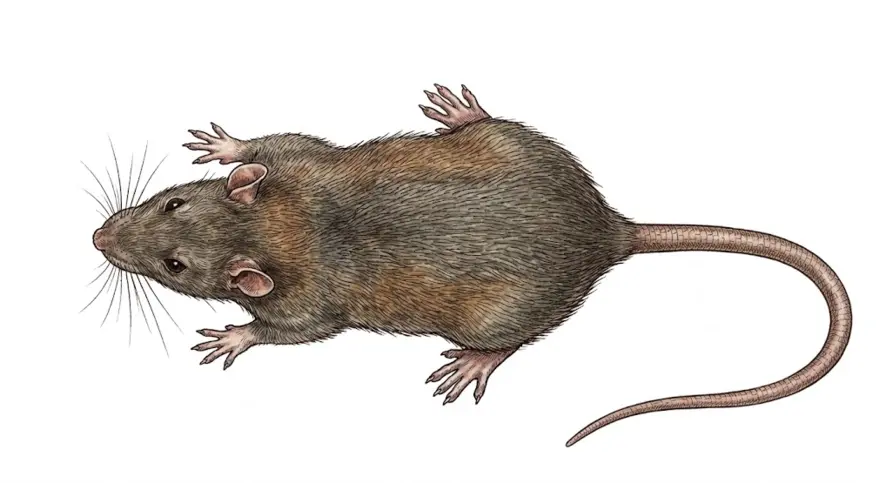
Norway rats and roof rats look and behave differently enough that identifying which one you have changes where to look for a nest. Norway rats are heavier with a shorter tail, while roof rats are slimmer with a tail longer than their body.
| Species | Appearance | Typical Nesting Site |
|---|---|---|
| Norway rat | About 1 lb, tail shorter than head and body combined | Burrows under foundations, slabs, and near ground level |
| Roof rat | Slender, darker, tail longer than the body | Attics, rafters, walls, and trees |
Signs Of Infestation
Dark, elongated, tapered ends. Fresh droppings look dark and moist, old ones turn gray and crumbly.
Chewed wood, wiring, food packaging, or stored items are a common early sign.
Oily smudges along frequently traveled routes, left behind by their fur.
Scratching or scurrying in walls or the attic, especially common with roof rats.
Risks And Damage
Rats gnaw constantly to keep their teeth from overgrowing, and that habit causes real damage: chewed electrical wiring, damaged insulation, and gnawed food containers. Chewed wiring is a genuine fire risk, not just an inconvenience.
Health risk matters too. Droppings and urine can contaminate food prep surfaces and pantries, and rats are known carriers of illnesses including salmonellosis. Clean up droppings carefully, avoid dry sweeping, and consider having a professional handle larger cleanups.
Prevention Tips
- Store food, including pet food, in airtight containers rather than open bags
- Seal cracks, gaps, and entry points around the foundation, roofline, and utility penetrations
- Trim tree limbs and dense vegetation back from the roofline, since roof rats use them to climb
- Keep garbage in containers with tightly fitting lids
- Address activity early, since rats reproduce quickly and a small problem grows fast