
Quick Answer
Subterranean termites are Alabama's most destructive home-invading pest. They live in underground colonies and build mud tubes to reach the wood in your home, and because they eat from the inside out, an infestation can cause thousands of dollars in damage before it's ever noticed. Alabama's warm, humid climate keeps termites active nearly year-round. If you see mud tubes, discarded wings, or wood that sounds hollow, it's time for an inspection.
Identification
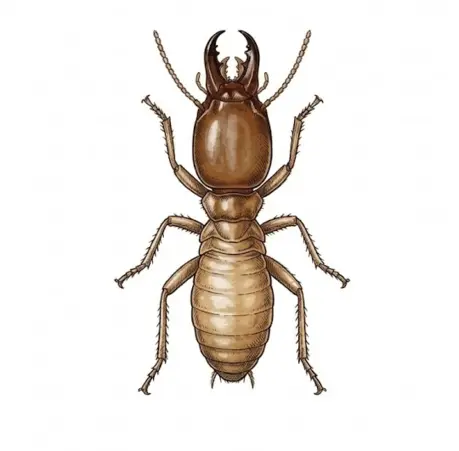
Subterranean termites live in three castes, and each looks different. Workers do the feeding and tunneling, soldiers defend the colony, and swarmers are the reproductive termites that start new colonies, usually in spring. Knowing the difference helps you identify what you're looking at if you spot one.
| Caste | Appearance | Role |
|---|---|---|
| Worker | Cream-colored, soft-bodied, about 1/8 inch long | Feeds and builds the mud tubes |
| Soldier | Similar body, darker rectangular head with strong mandibles | Defends the colony |
| Swarmer | Dark brown to black, two pairs of equal-length wings | Leaves the colony to start a new one |
Signs Of Infestation
Pencil-width tunnels of soil and saliva along foundations, piers, or crawl space walls.
Small piles near windows or doors, especially common in spring.
Tap along baseboards, door frames, and window sills to check.
Usually means a colony is already established in or under the structure.
Risks And Damage
Alabama's climate is especially favorable to termites, which can be active year-round throughout most of the state, and entomologists have tracked infestations spreading further into central Alabama in recent years. Because termites feed from the inside out, damage is often invisible until it's advanced.
Later-stage warning signs: sagging floors, doors and windows that stick, or bubbling paint that resembles water damage. If you're seeing any of these, the infestation has likely been active for a while.
Prevention Tips
- Keep firewood, mulch, and wood debris off the ground and away from the foundation
- Fix leaks and standing water near the foundation, since moisture draws termites in
- Trim landscaping back from siding to reduce moisture and hiding spots
- Address any wood-to-soil contact around the home, like deck posts or stair stringers
- Schedule an annual termite inspection, ideally before spring swarm season