
Quick Answer
Yellow jackets are aggressive wasps, not bees, and late summer through fall is their peak season in Alabama. They nest underground in old rodent burrows or above ground in eaves, attics, and wall voids. Unlike honeybees, yellow jackets can sting repeatedly, and disturbing a hidden ground nest while mowing or doing yard work can trigger a swarm of hundreds.
Identification
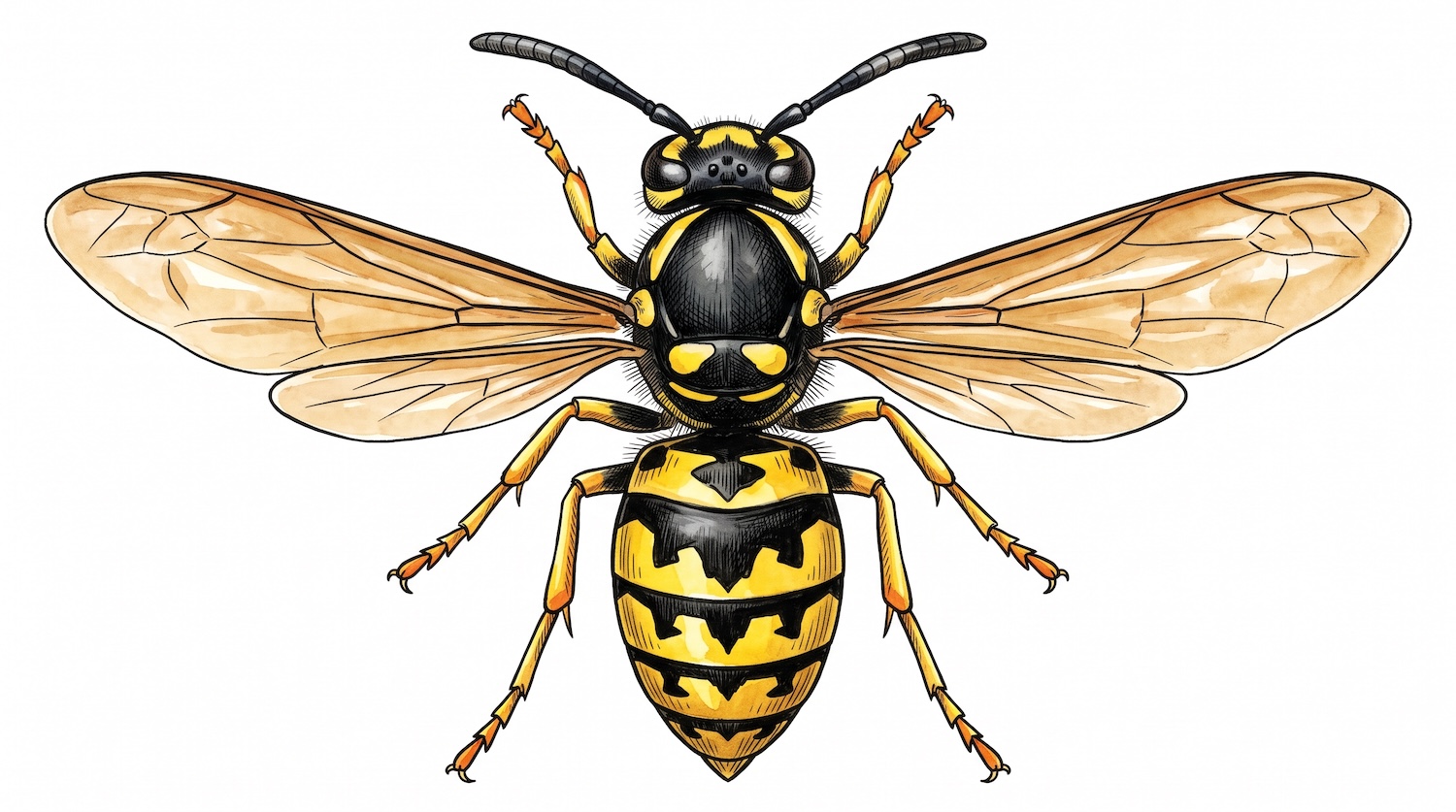
Yellow jackets get their name from their bright yellow and black stripes. They are often mistaken for bees, but they fly in a quick, side-to-side pattern before landing. Most colonies die off each winter, but Alabama's mild winters sometimes let a colony survive into a second year and grow into a perennial "super nest."
| Nest Type | Size And Lifespan | Typical Colony |
|---|---|---|
| Typical nest | Usually hidden in the ground or a wall void, dies off in winter | Around 4,000 workers by the end of the season |
| Perennial "super nest" | Survives into a second year and can grow several feet wide | Up to about 15,000 workers, often with multiple queens |
Signs Of Infestation
Ground nest entrances are usually about the size of a nickel, often near shrubs or in leaf-covered areas.
Small stones and dirt piling up around a hole in the ground point to an active underground nest.
A stream of yellow jackets flying in and out of a hole, wall gap, eave, or crack in a slab during the day.
Yellow jackets gathering around garbage and recycling bins, especially where sugary drinks and food scraps collect.
Risks And Damage
Yellow jackets attack anything they see as a threat to their nest, and they become more aggressive in fall as colonies start to die out. They keep their stingers, so a single yellow jacket can sting over and over. When one stings, it also marks the person with an alarm scent that can last for hours and draw other yellow jackets in. For people with allergies, stings can trigger dangerous reactions, so anyone with trouble breathing or major swelling after a sting should get medical care right away.
Store-bought wasp spray rarely finishes the job. Aerosol sprays have little effect on an entire colony, and nests in wall voids or large ground nests are best left to a licensed professional with the right equipment and safety gear.
Prevention Tips
- Keep garbage and recycling bins sealed, and rinse out cans and bottles that held sugary drinks
- Clean up food and drinks promptly after outdoor meals
- Seal cracks and gaps around eaves, awnings, and siding that could serve as nesting sites
- Walk your yard before mowing in late summer and fall, and watch for yellow jackets entering and leaving the ground
- Wear shoes, gloves, and long sleeves when mowing or doing yard work
- Leave nests alone, and never block or disturb a nest entrance